


“Do you have any idea how big the world is?” Job 38:18
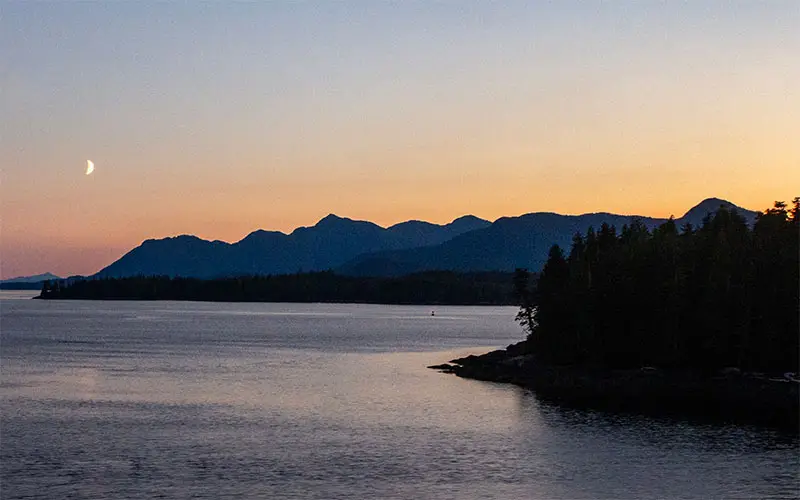
Standing on the balcony of our stateroom, I watch the sun set over the dark shoulders of pineclad islands. I love the slow passing of these shadowed wonders. Not a single light shines on their shores – they are silent witnesses to life beyond the regular contact of man. I find that remoteness strangely appealing.
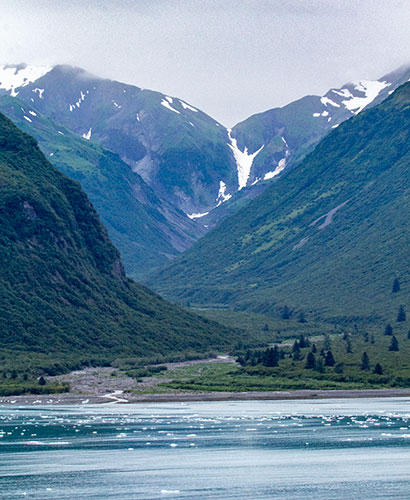
It’s worth examining that a bit. Why do wild places speak to me? Why do they have such a powerful pull on my soul? Earlier today, the slow progress of the ship unveiled a lonely valley. Looking up the central river to the snowclad peak in the distance, I felt such a longing to walk there, to experience the untamed nature for myself.
Why do far-flung vistas fill me with such longing?
The answer may lie in the closing chapters of Job. I recently completed my long detailed study of the book and was delighted to have my perception of the ending chapters reshaped. In them, after the long (and at times, repetitious) debates of Job and his friends, God finally speaks. I have always found his approach difficult to understand.
It seemed to me that God used examples of nature to put Job in his place, as if asking, “You dare to challenge me? Do you know how hard it is to be God? Can you do this? Or this?” In this flawed interpretation, God seems to punish Job for asking his hard questions.
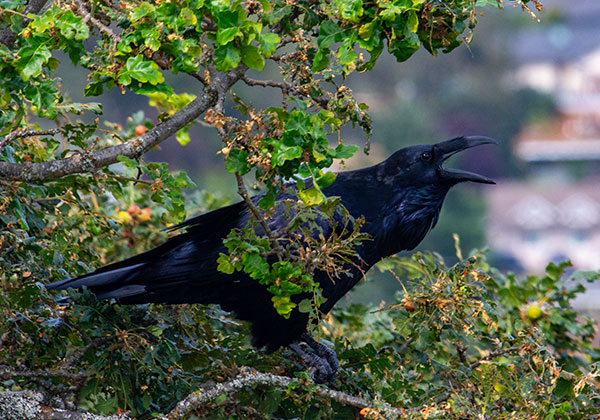
Commentaries helped me to see these chapters in a very different way. God is not challenging Job, he’s inviting him. Come with me, God is saying, I want to show you something. Then he leads his troubled child through some wild places, showing him the natural world beyond the reach of man, starting with grand arenas – the stars, the sea, the clouds – then moving to wild animals. Together, God and Job view, among other creatures, ravens, lions, ostriches, even an auroch – an ancient, enormous wild ox. Yes, God does seem to poke Job’s very human elevated sense of importance. But this natural tour is a loving gesture. It’s as if God lifts the veil for Job (and us) to see what goes on in those regions where man has no sway.
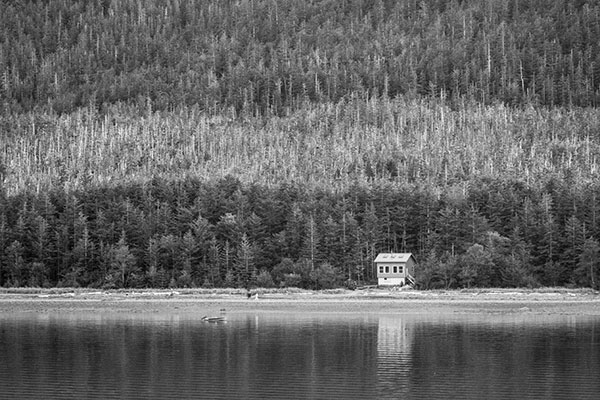
Painful situations can be isolating. Tragedy, illness, grief, any kind of loss can feel beyond the help of other humans. Job certainly experienced that. God’s answer to him, and to us, is to show us places even more remote and demonstrate how his care extends even that far, to even these living things.
And the descriptions! You can tell that God delights in these wild animals. He doesn’t just provide food from afar. He points out specific traits and quirks for each of them. He knows them and enjoys them.
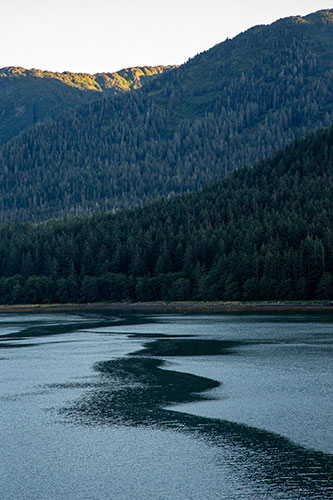
This is why wild places draw us. We can test out David’s declaration of God’s ubiquitous care in Ps. 139, taking the wings of the dawn to the far side of the sea, pointing to some lonesome spot and asking, “Even there, Lord?”
Yes, my child, even there.
Lord, you are the God of the far-flung places. We call them “untouched,” but your hand of care is evident everywhere. Encourage us through this: that anywhere man can be – and even where he can’t – Thou, God, art present there.
Reader: Tell me about the wildest place you’ve been and how your soul reacted.
Feel free to email me at: [email protected]. I love to hear from my readers.


